PRODUCTS
‹
›
‹
›

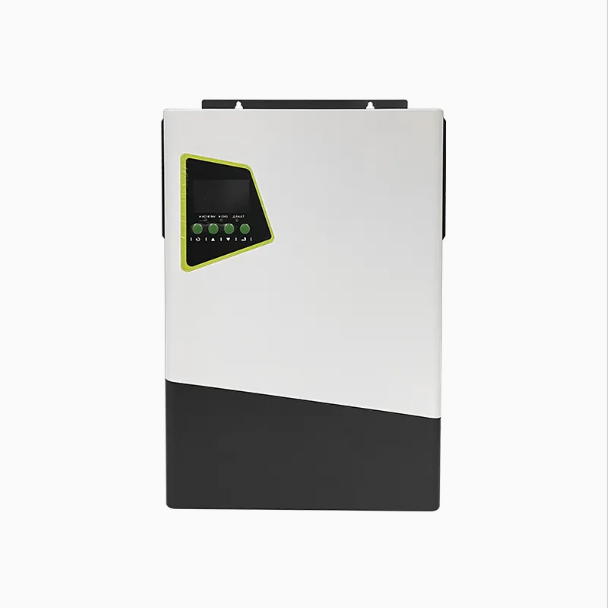
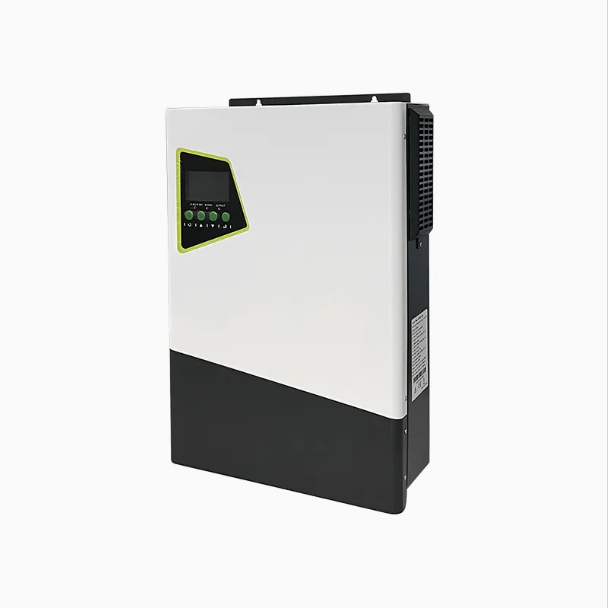
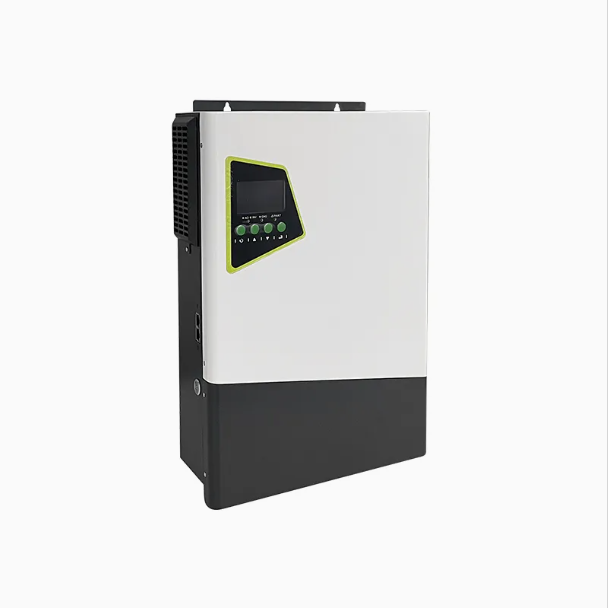
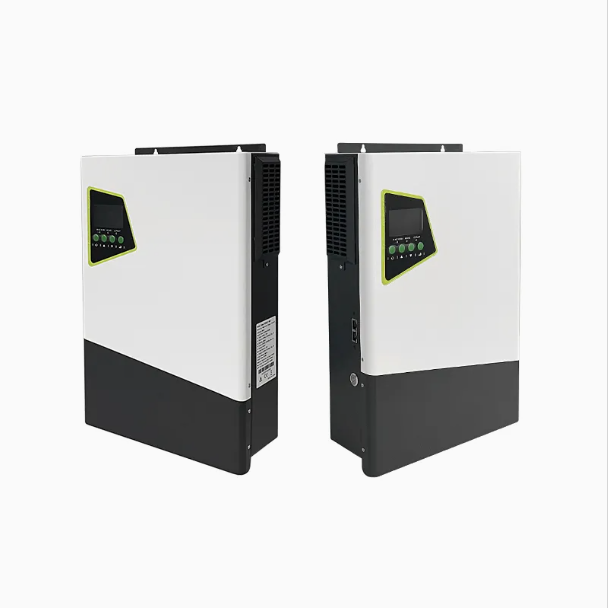
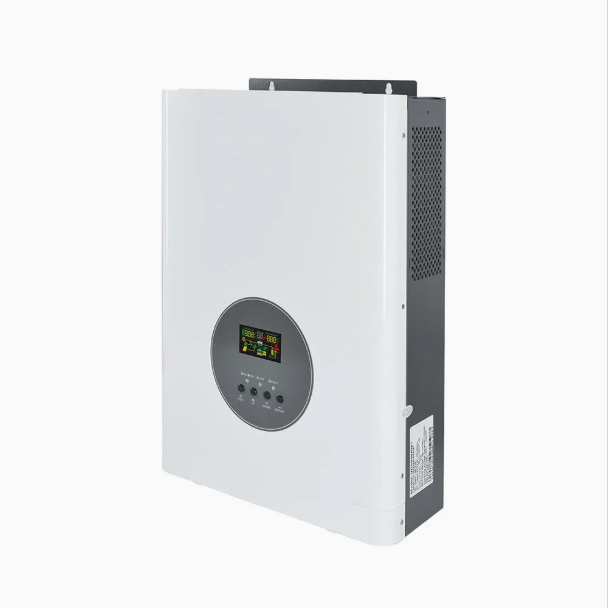
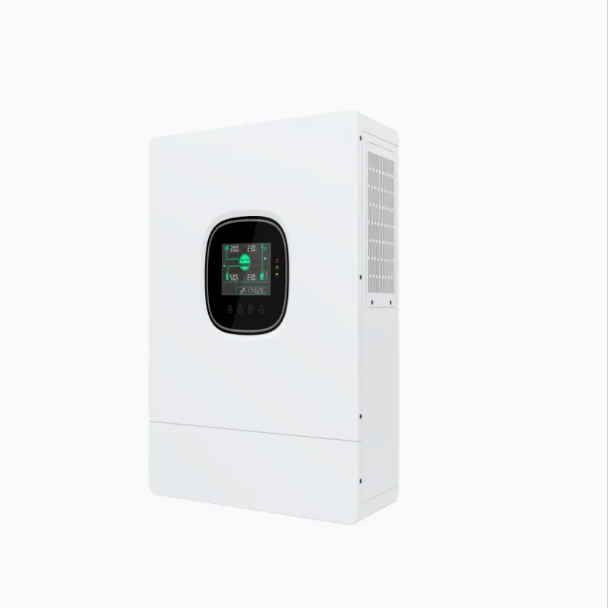
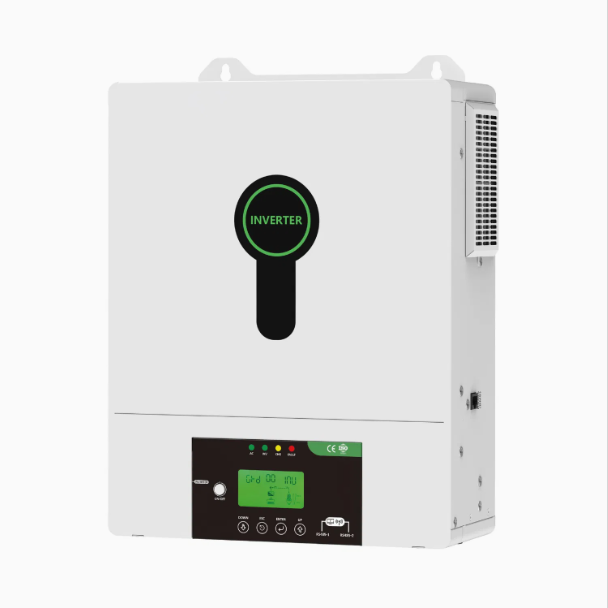
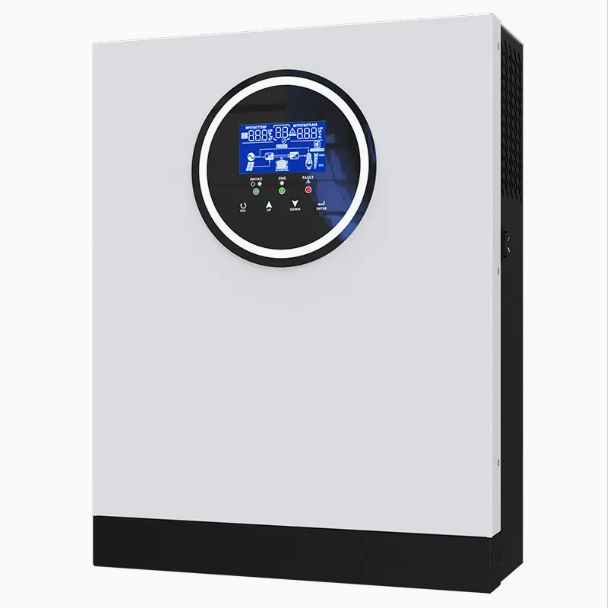
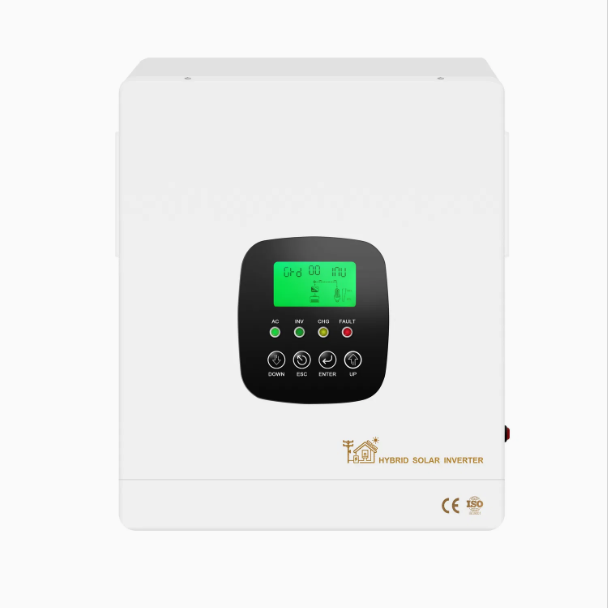
5kW Off-Grid Solar Inverter
Certifications: CE, IEC 62109, IEC 61727, UL, TUV, RoHS
Rated Output Power: 5,000W / 5kVA
Peak Power: 10,000VA (5 seconds)
Battery Voltage: 48V DC
Output Waveform: Pure Sine Wave
MPPT Charge Controller: Built-in, 80A / 100A / 120A (varies by model)
Max PV Input Power: 5,000W ~ 7,500W
Protection Level: IP20 / IP21 (indoor) / IP65 (outdoor optional)
Transfer Time: 10ms (UPS mode) / 20ms (Appliance mode)
Product Description
The 5kW Off-Grid Solar Inverter is a core independent power supply device designed for households, small commercial applications, and areas without grid access. It integrates PV charge control, battery charge/discharge management, DC-AC inversion, and load power supply. Using a 48V low-voltage battery bank as the energy storage core, the system efficiently harvests PV power through a built-in MPPT charge controller and outputs pure sine wave AC power for loads, achieving fully independent off-grid operation.
The product adopts high-frequency switching technology with high power density, compact size, light weight, and high overall efficiency. The built-in MPPT solar charge controller has an MPPT voltage range of 120~500VDC (varies by model) and supports a maximum PV input power of 5,000W~7,500W, allowing PV oversizing to boost generation during early/late hours and cloudy days. The pure sine wave output has a total harmonic distortion of <3%, safely driving air conditioners, refrigerators, water pumps, motors, and various inductive and capacitive loads. Motor load capability reaches 4.8 horsepower.
The system supports flexible priority settings among PV, grid/generator, and battery, selectable via LCD screen among PV priority, grid priority, or battery priority modes. Battery compatibility is strong, supporting lead-acid (AGM, Gel, Flooded) and lithium-ion batteries, with lithium charging strategies adaptive to BMS (RS485/CAN communication).The system supports parallel expansion of up to 6~16 units or three-phase configuration, flexibly expandable to 30kW~80kW for various off-grid power needs. The product is equipped with comprehensive protection functions including battery over-discharge protection, overload protection, over-temperature protection, short circuit protection, and output overvoltage protection, ensuring safe and reliable system operation.
Application Scenarios
Residential Off-Grid PV Systems — Provide independent power for daily lighting, TV, refrigerator, air conditioner, washing machine, and other household appliances in remote mountainous areas, plateaus, and pastoral regions without grid coverage. A single 5kW unit meets most household off-grid power needs
RV & Marine Power Systems — Provide AC power for RVs, campervans, and marine systems, supporting PV charging and complementary grid/generator charging for flexible power supply in mobile scenarios
Communication Base Stations & Monitoring Systems — Provide stable and reliable off-grid power for communication base stations, microwave relay stations, and video surveillance equipment in remote areas, supporting unattended operation
Emergency Backup Power — Provide uninterrupted power for emergency lighting, communication equipment, and medical devices during natural disasters or grid failures
Islands & Border Outposts — Work with PV modules to build independent microgrids, solving power supply issues for remote islands and border outposts, supporting multi-unit parallel expansion
Agriculture & Field Operations — Provide mobile off-grid power for agricultural irrigation pumps, geological exploration equipment, and temporary construction sites
Small Commercial & Pastoral Areas — Provide economical and practical independent power solutions for pastoral shops, small clinics, and tourist stations
Product Parameters
The following are general specifications for mainstream 5kW off-grid inverters (typical configuration: 48V battery platform, 230VAC output):
System Components
The system consists of a PV MPPT charge control unit (with maximum power point tracking module and 80A~120A charge controller), battery charge/discharge management unit (supporting adaptive management of lead-acid and lithium-ion batteries), DC-AC inversion unit (high-frequency pure sine wave output, rated power 5kW), AC bypass and charging unit (grid/generator input switching and battery charge management, max hybrid charging current 120A), intelligent control and protection unit (including LCD display, multi-mode priority settings, and comprehensive protection functions), communication and monitoring unit (including RS485/CAN interfaces and optional WiFi/GPRS monitoring module), and wall-mounted metal enclosure. The system supports flexible priority settings among PV, grid/generator, and battery, with operation parameter viewing and mode switching via LCD screen or mobile APP.
- Q : How much money can a C&I energy storage system save my business?A : Savings depend on your electricity consumption, local peak/off-peak price differentials, and system capacity. For a 215kWh system with one charge-discharge cycle per day, assuming a price differential of $0.10/kWh, a single cycle can save approximately $21.50. Actual returns vary by local utility rates and load profiles. We can provide a customized ROI analysis for your business.
- Q : How do I choose the right storage capacity for my business?A : Capacity selection is based on two key factors: peak load power (determines PCS rating) and energy shifting demand (determines battery capacity). Typically, we analyze your past 12 months of utility bills to calculate maximum demand and off-peak charging needs. We recommend leaving about 20% capacity margin for future load growth.
- Q : What is the typical payback period for a C&I ESS?A : The payback period for C&I energy storage projects is typically 3–6 years, depending on local peak/off-peak price differentials, system costs, government incentives, and your company's self-consumption capability. With declining battery costs and ongoing power market reforms, payback periods continue to shorten.
- Q : Liquid-cooled vs. air-cooled – which should I choose?A : Here's a quick comparison:
Liquid-cooled series: Provides precise thermal control with temperature differences maintained within < 3°C, significantly extending battery cycle life and improving efficiency in high-temperature environments. Ideal for high-density, high-power projects.
Air-cooled series: Mature technology with lower upfront investment and simpler maintenance. Suitable for small to medium-sized projects or cost-sensitive applications.
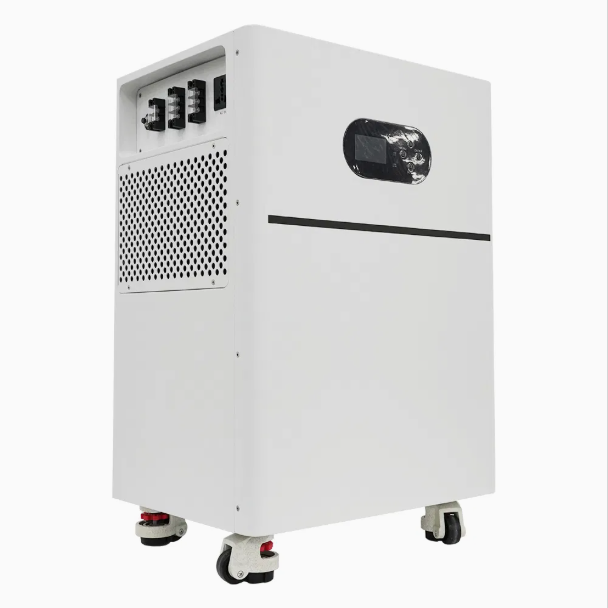
 Customizable residential energy storage
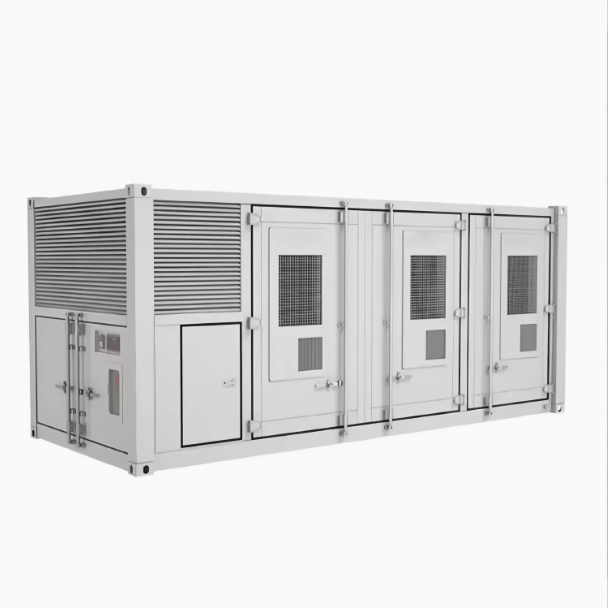
 Containerized energy storage can be customized
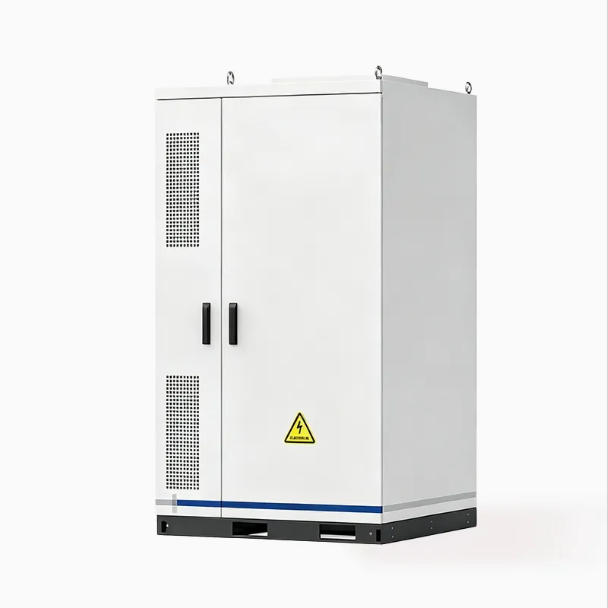
 Customizable industrial and commercial energy storage
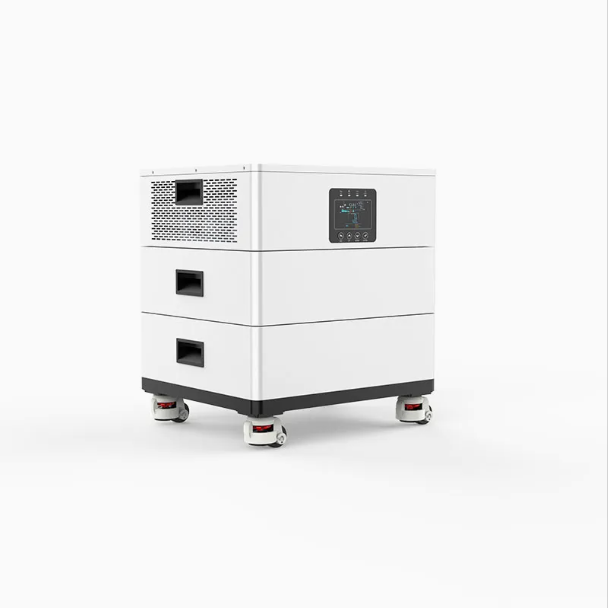
 Stackable Home Energy Storage
 All-in-One Home Energy Storage System Series
 Floor-Standing Home Energy Storage
 Wall-Mounted Home Energy Storage
 5kW Off-Grid Solar Inverter
 3kW Off-Grid Solar Inverter
 10kW Off-Grid Solar Inverter
 6-10kW Hybrid Solar Inverter
 3-6kW Hybrid Solar Inverter
 10-20kW Hybrid Solar Inverter
 High-Voltage 512V 300Ah LiFePO4 Battery System
 LiFePO4 Battery Portable Power Station
") Energy Storage Booster Station Substation (PCS Storage-Booster Integrated Cabin)
Energy Storage Booster Station Substation (PCS Storage-Booster Integrated Cabin)") 5MWh All-in-One Energy Storage Container (Air-Cooled / Liquid-Cooled)
5MWh All-in-One Energy Storage Container (Air-Cooled / Liquid-Cooled)") 2MWh All-in-One Energy Storage Container (Air-Cooled / Liquid-Cooled)
2MWh All-in-One Energy Storage Container (Air-Cooled / Liquid-Cooled)
Contact Us
If you have any cooperation intentions or product questions, please leave us a message!
We will get back to you as soon as possible!
Please give us a message